Divorce and spousal support can be complex and emotionally challenging processes. At Christine Sue Cook, LLC, we understand the difficulties you may face during this time.
Our goal is to provide you with practical guidance on navigating these legal waters. This post will help you understand the key aspects of divorce and spousal support, prepare for negotiations, and navigate the legal process effectively.
Divorce marks the legal end of a marriage. Spousal support (also known as alimony) involves financial assistance one spouse provides to another during or after divorce proceedings. These concepts often confuse clients as they start their divorce journey.
Courts typically recognize three main categories of spousal support:
When determining spousal support, courts weigh various factors:
The Journal of the American Academy of Matrimonial Lawyers (JAAML), established in 1984, features peer-reviewed articles, reviews, and editorials on matrimonial law.
Facing divorce and potential spousal support requires careful planning:
The financial impact of divorce can be significant, especially for women. Consider this striking statistic:
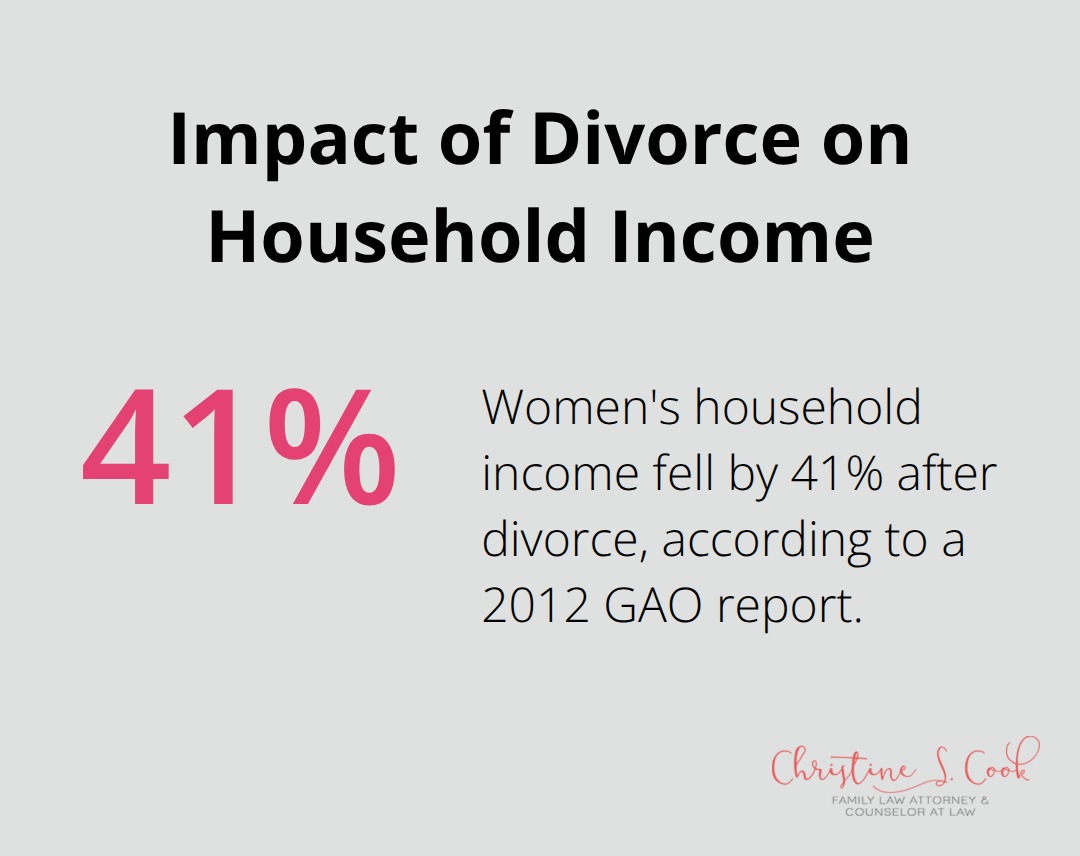
This dramatic decline in household income underscores the importance of careful financial planning during divorce proceedings.
Clients who approach these issues with clear understanding and realistic expectations often achieve better outcomes in their divorce proceedings. As we move forward, let’s examine how to prepare effectively for divorce and spousal support negotiations.
The foundation of any successful negotiation is comprehensive financial documentation. Start by collecting:
To ensure you’re fully prepared for divorce negotiations, gather these essential financial documents:
Having these documents readily available will streamline the negotiation process and help you make informed decisions about your financial future.
Facing a divorce? Discover how financial planning can help safeguard your financial interests and set the foundation for your new start.
Creating a post-divorce budget is essential. This step helps you understand your financial needs and informs spousal support discussions. Consider:
While traditional litigation is an option, alternative dispute resolution methods often lead to more satisfactory outcomes. Mediation and collaborative divorce are two popular choices:
Mediation involves a neutral third party who helps facilitate discussions and reach agreements. This study showed that mediated divorce cases were more durable than litigated and negotiated cases amongst cases with children.
Collaborative divorce involves a team approach, with each spouse represented by an attorney committed to resolving issues without going to court. This process often results in creative solutions tailored to the family’s unique needs.
Professional guidance can make a significant difference in your divorce preparation. An experienced family law attorney (like those at Christine S. Cook, LLC) can provide valuable insights into local laws and help you develop a strong negotiation strategy.
Financial advisors can also play a key role in this process. They can help you understand the long-term implications of different settlement options and ensure you make informed decisions about your financial future.
As you prepare for the next steps in your divorce journey, it’s important to understand the legal process of divorce and spousal support. Let’s examine how to navigate these complex legal waters effectively.
The legal journey of divorce begins with filing a petition. This document outlines the grounds for divorce and any requests for spousal support. In Florida, you must file in the county where you or your spouse last lived together.
The Florida Courts set the filing fee for divorce at approximately $400 (this can vary by county). If financial constraints prevent you from paying this fee, you may qualify for a waiver.
After filing, your spouse must receive the divorce papers. They have 20 days to respond. If they fail to do so, the court may grant a default judgment in your favor.
Spousal support negotiations often prove contentious in divorce proceedings. Florida courts consider several factors when determining alimony:
When determining alimony, Florida courts take a comprehensive approach, considering various factors to ensure a fair outcome. The following chart illustrates the key elements they evaluate:
Understanding these factors can help you prepare a stronger case and set realistic expectations for potential alimony arrangements.
Many individuals receiving spousal support are feeling the impact of inflation, and fortunately, there may be legal options to help adjust payments.
To strengthen your position, provide detailed financial records and a clear post-divorce budget. This demonstrates your needs and your spouse’s ability to pay.
If you and your spouse can’t agree on spousal support terms, the court will decide. This typically involves attending hearings and potentially a trial.
During these proceedings, both parties present evidence supporting their position on spousal support. This may include financial documents, witness testimony, and expert opinions.
To navigate this process effectively, work closely with your attorney. They can help you prepare for hearings, gather necessary evidence, and present your case persuasively.
At Christine S. Cook, LLC, we guide clients through this complex process with expertise and compassion. Our goal is to help you reach a fair agreement that provides financial stability for both parties.
While traditional litigation remains an option, alternative dispute resolution methods often lead to more satisfactory outcomes. Mediation and collaborative divorce are two popular choices:
Mediation involves a neutral third party who helps facilitate discussions and reach agreements.
Collaborative divorce involves a team approach, with each spouse represented by an attorney committed to resolving issues without going to court. This process often results in creative solutions tailored to the family’s unique needs.
Divorce and spousal support negotiations present significant challenges. You must gather comprehensive financial documentation and assess your post-divorce needs. Alternative dispute resolution methods like mediation or collaborative divorce often lead to more satisfactory outcomes than lengthy court battles.
The legal process requires careful preparation and strategic thinking. Florida courts consider various factors when determining alimony, including the standard of living during marriage and each party’s financial resources. Presenting detailed financial records strengthens your case for your needs.
At Christine S. Cook, LLC, we provide expert guidance through every step of the divorce process. Our experienced team offers compassionate and innovative legal solutions tailored to your unique situation (including divorce and spousal support cases). We strive to help you achieve a fair resolution that provides financial stability as you move forward into the next chapter of your life.